 How advanced carbon nanomaterials can enable on-site environmental sensing"
class="w-full h-full object-cover"
/>
How advanced carbon nanomaterials can enable on-site environmental sensing"
class="w-full h-full object-cover"
/>
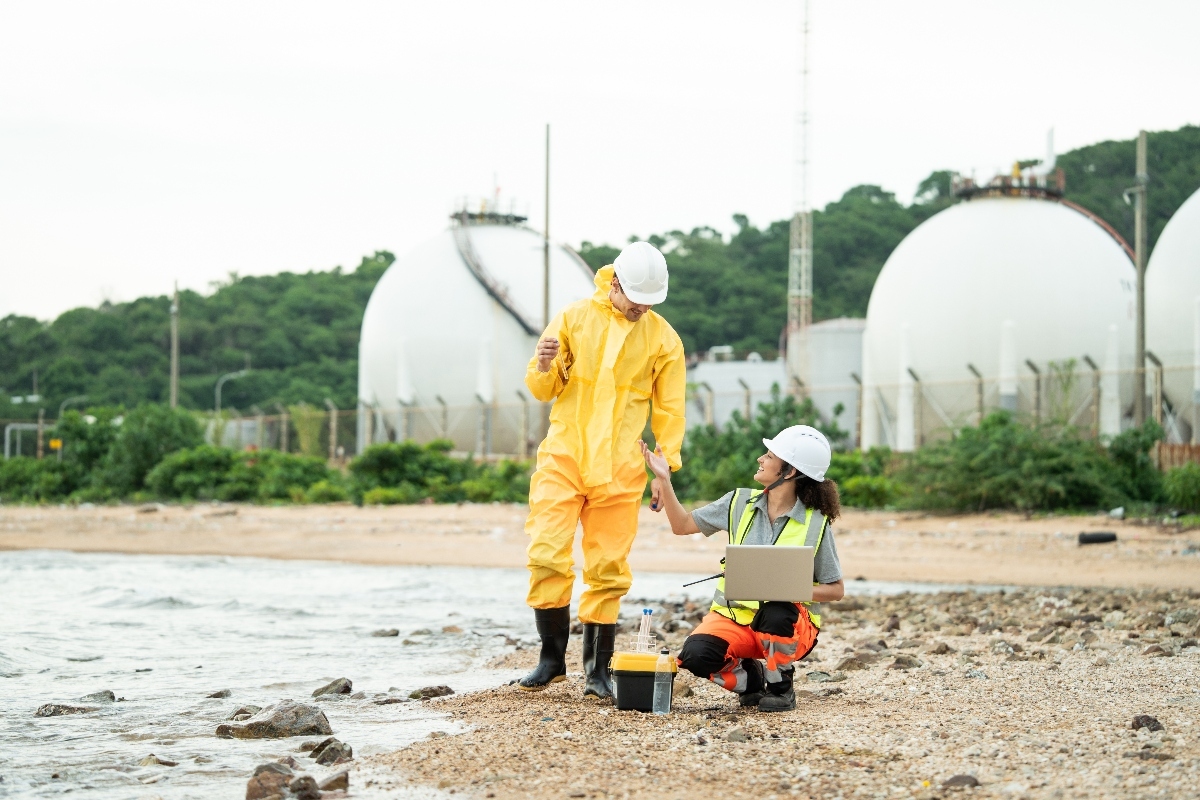
The shift towards real-time, on-site environmental monitoring is becoming an operational necessity. Regulatory pressure, environmental volatility and the limitations of laboratory-based workflows are driving demand for sensing technologies capable of delivering continuous, in-situ data.
Despite advances in electrochemistry, microfabrication and data infrastructure, widespread on-site deployment remains constrained. The fundamental barrier is not the sensing modality itself, but the material that underpins it.
At the core of every electrochemical sensor lies the transducer interface. It is here that chemical interactions are converted into measurable electrical signals. In controlled laboratory environments, many materials perform adequately. In real-world environmental conditions, however, their limitations become pronounced.
Why traditional transducer materials fail in the field
Environmental matrices are inherently complex. Natural waters, wastewater streams and soil eluents contain a dynamic mixture of organic matter, microorganisms, suspended particulates and dissolved ions. These components continuously interact with the sensor surface, altering its electrochemical behaviour over time. For conventional electrode materials, this leads to three persistent failure modes.
Biofouling and surface conditioning
The moment a sensor is deployed, its surface begins to adsorb proteins, microbial species and organic compounds. This fouling layer modifies the double-layer structure and impedes electron transfer. Even thin films can introduce significant increases in impedance, reduce sensitivity and obscure target-specific signals. Over extended deployments, biofilm formation can effectively insulate the electrode, rendering it non-functional.
Signal drift and instability
Traditional materials such as noble metals or printed carbon inks often exhibit unstable electrochemical behaviour under fluctuating environmental conditions. Variations in pH, ionic strength, temperature and flow dynamics continuously perturb the sensing interface. Without a stable material foundation, this results in signal drift, frequent recalibration and reduced confidence in long-term data.
Manufacturing variability and poor scalability
Perhaps less visible, but equally critical, is the issue of reproducibility. Environmental monitoring rarely relies on a single sensor. It depends on networks of devices expected to produce comparable data across locations and time. Conventional materials often suffer from batch-to-batch variability in surface morphology, active area and electrochemical properties. Small inconsistencies at the material level translate into large deviations in sensor performance, undermining the integrity of distributed monitoring systems.
The material requirements for on-site sensing
To function effectively in environmental settings, transducer materials must satisfy a distinct set of criteria that extend beyond laboratory performance:
-
Electrochemical stability over extended deployment periods
-
Resistance to both biological and chemical fouling
-
High signal-to-noise ratios in chemically complex matrices
-
Reproducible electrochemical properties across large-scale manufacturing
-
Compatibility with functionalisation strategies for selective detection
Meeting all of these requirements simultaneously has proven challenging for traditional materials. As a result, the development of on-site environmental sensing has been constrained not by a lack of detection strategies, but by the absence of suitable material platforms.
The role of advanced carbon nanomaterials
Advanced carbon nanomaterials are emerging as a solution precisely because they address these constraints at the material level. Unlike conventional carbons or metal electrodes, engineered nanostructured carbons offer a combination of properties that are inherently aligned with the demands of environmental sensing.
Intrinsic resistance to fouling
The surface chemistry and morphology of advanced carbon nanomaterials can suppress non-specific adsorption and reduce the impact of biofouling. By limiting the formation of insulating layers and maintaining access to active sites, these materials preserve signal integrity over longer deployment periods.
High electroactive surface area
Three-dimensional nanostructures provide a significantly increased active surface area relative to their geometric footprint. This enhances sensitivity and enables detection of low-concentration analytes even in the presence of competing species.
Low noise and efficient electron transfer
Well-structured carbon nanomaterials exhibit favourable electron-transfer kinetics and reduced background noise. This is critical for resolving small signal changes within chemically noisy environments such as wastewater or natural water systems.
Mechanical and chemical robustness
Environmental sensing often involves fluctuating flow conditions, particulate exposure and chemical variability. Advanced carbon materials can maintain structural integrity under these conditions, supporting stable operation across diverse deployment scenarios.
Scalable and reproducible manufacturing
Importantly, engineered carbon nanomaterials can be fabricated using controlled processes that deliver consistent electrochemical properties across batches. This reproducibility is essential for sensor networks, where comparability between devices underpins data reliability.
From material innovation to deployable sensing
The transition from laboratory sensors to on-site environmental monitoring depends on bridging the gap between performance and practicality. This is where advanced carbon nanomaterials play a defining role. They are designed to deliver:
- Consistent, reproducible electrode behaviour across manufacturing batches
- Stable electrochemical performance in complex, fouling-prone environments
- High sensitivity enabled by an intrinsically large electroactive surface area
- Low-noise signal transduction suitable for trace-level detection
By addressing the core failure modes of traditional materials, these materials enable sensors to maintain performance outside controlled laboratory conditions. This stability at the interface level is what allows electrochemical sensing to move from intermittent testing to continuous, in-situ monitoring.
Enabling the next generation of environmental monitoring
The path to reliable, on-site environmental sensing begins at the material interface. Without a transducer that can resist fouling, maintain electrochemical stability and be manufactured consistently at scale, even the most advanced sensing systems remain confined to the laboratory. This is the fundamental barrier limiting real-world deployment.
Gii directly addresses this challenge. Its three-dimensional nanostructure and controlled manufacturing deliver a stable, low-noise sensing interface that performs in complex environments. With intrinsic antifouling behaviour, high electroactive surface area and strong batch-to-batch reproducibility, it enables accurate, consistent detection across distributed sensor networks.
For organisations developing next-generation monitoring platforms, this shifts sensing from concept to deployment. Gii is the material foundation that enables continuous, in-situ environmental monitoring at scale. Download our guide below to find out more.