 What types of sensors are used in environmental monitoring?"
class="w-full h-full object-cover"
/>
What types of sensors are used in environmental monitoring?"
class="w-full h-full object-cover"
/>
Environmental monitoring has a diverse suite of sensing technologies to detect and track physical, chemical and biological parameters across a variety of ecosystems. These sensors form the backbone of efforts to understand environmental change and support regulatory compliance in contexts from air quality management to precision agriculture. The choice of sensor technology is extremely important for the sensitivity, specificity, temporal resolution, and long-term reliability of the measured data.
Engineers need a wide understanding of environmental sensors (from traditional physical transducers to modern IoT-enabled systems) to understand which fits where and why to make the right choice for their specific application.
Why environmental monitoring requires multiple sensor types
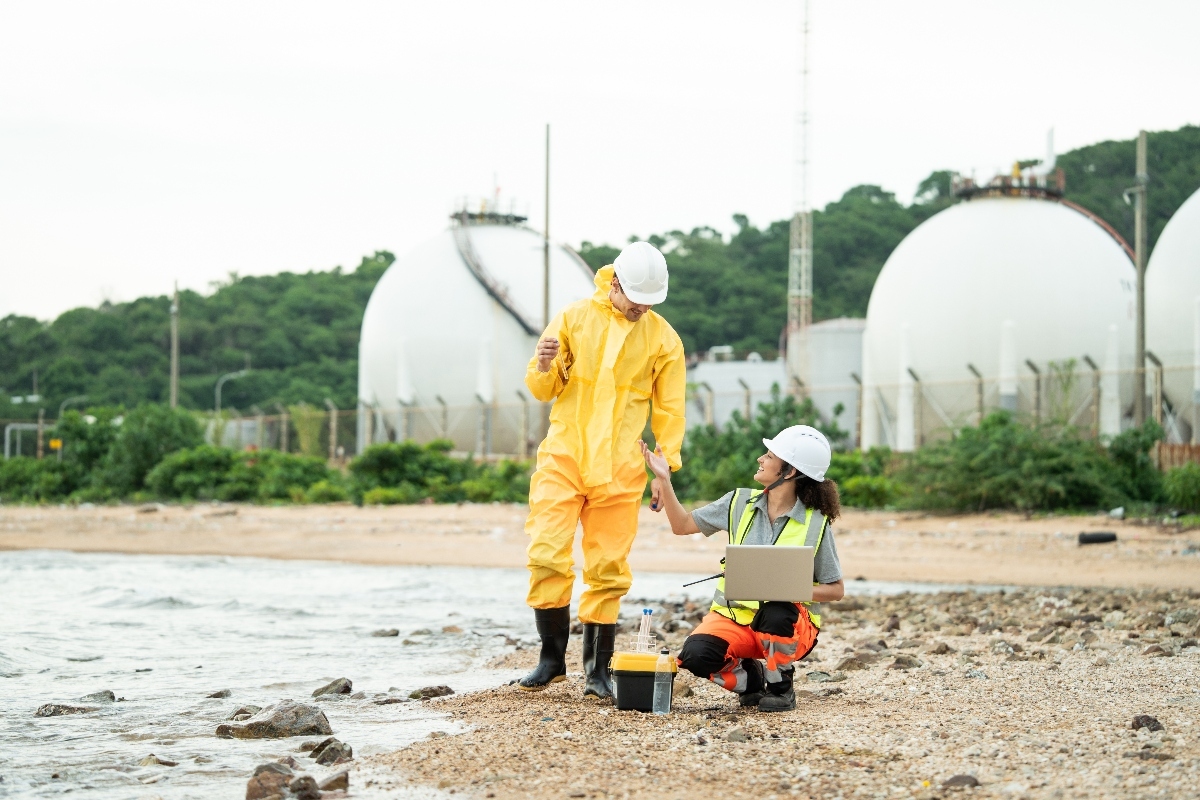
Each form of environmental monitoring faces a fundamentally different set of sensing challenges. Air, water, soil and urban environments each present distinct physical, chemical and biological conditions which vary across spatial scales, timescales and regulatory contexts.
For example, monitoring atmospheric particulates in an urban environment can be performed via rapid temporal resolution and tolerance to fluctuating temperature and humidity. Conversely, groundwater monitoring prioritises long-term chemical stability and resistance to fouling in chemically complex matrices. Similarly, detecting trace-level pollutants such as heavy metals or PFAS in water demands high analytical sensitivity, whereas ecological monitoring may focus on biological indicators that evolve over weeks or months.
These differences mean that historically there has been no one-size-fits-all sensing technology to adequately address all environmental monitoring needs. Sensor performance is constrained by several interdependent factors:
-
Measurement target: Physical parameters, chemical species or biological markers
-
Matrix complexity: Clean air versus wastewater, surface water, soil eluates or biofilms
-
Temporal requirements: Continuous real-time sensing versus periodic sampling
-
Deployment conditions: Laboratory, field, remote, submerged or autonomous
-
Regulatory expectations: Accuracy, traceability, and reproducibility over long durations
As a result, environmental monitoring systems have historically relied on a diverse mix of sensing principles, each optimised for a narrow set of conditions. While this approach has enabled decades of environmental data collection, it has also led to a fragmented technology landscape in which many sensors are highly specialised, difficult to integrate and often based on legacy designs.
Types of environmental sensors
To address the wide range of environmental measurement challenges, several distinct classes of sensors are commonly deployed across monitoring programmes. These sensor types differ in what they measure, how they transduce environmental signals, how they interact with complex matrices and how well they perform under long-term field conditions.
Physical and environmental transducers
These are the foundation of most environmental monitoring systems, converting physical phenomena into electrical signals.
-
Temperature and humidity sensors: Fundamental for atmospheric and soil monitoring, these devices use resistive or capacitive sensing elements to measure thermal and moisture conditions with broad applicability across climatology, agriculture and building systems.
-
Pressure and wind sensors: Barometric pressure transducers and anemometers provide data for weather prediction, atmospheric modelling,and pollutant dispersion studies.
-
Radiation and light sensors: Photodetectors and optical sensors measure solar irradiance, UV exposure, and other radiative parameters essential in ecosystem and climate studies.
Chemical and gas sensors
Chemical sensors detect specific molecular species in the environment (especially pollutants) and bridge the physical and chemical domains of environmental monitoring.
-
Electrochemical gas sensors: Commonly deployed for gases such as CO, NOₓ, O₃ and VOCs (volatile organic compounds), these devices rely on electrochemical reactions at electrodes to produce current proportional to analyte concentration.
-
Infrared and spectroscopic sensors: Instruments like nondispersive infrared (NDIR) systems measure gases such as carbon dioxide by probing absorption at characteristic wavelengths.
-
Optical fibre and spectral sensors: Fibre optic sensors provide detection capabilities in challenging environments, offering immunity to electromagnetic interference and robustness under extreme conditions.
Biological and biochemical sensors
Biological sensing technologies are specialised for detecting living organisms or biological markers in environmental matrices.
-
Biological field sensors: Biologging tags and acoustic monitors for wildlife tracking provide ecosystem-level data essential to conservation and biodiversity monitoring.
-
Chemical/biochemical sensors: These detect pathogens or biochemical pollutants in water or soil, often leveraging enzyme-linked or DNA-based recognition.
Legacy challenges across sensor types
Although environmental sensing has evolved with improvements in materials and network integration, there is still widespread reliance on established sensor architectures originally conceived decades ago. Long-established transducers (such as electrochemical gas cells, thermistors and basic optical sensors) are still ubiquitous because of their proven reliability and existing regulatory acceptance. However, these legacy designs often exhibit:
-
Calibration drift: Many older sensors require regular manual calibration to maintain accuracy over long deployments.
-
Limited sensitivity and specificity: Outdated sensing materials or single-parameter detection schemes struggle with complex environmental matrices.
-
Poor integration capabilities: Legacy hardware frequently lacks the interfaces or power-efficiency required for dense, autonomous, networked operation.
The path to next-generation environmental monitoring
Environmental monitoring increasingly demands sensors that can operate continuously, in situ and in complex real-world environments. A wide range of sensor types exist to address different monitoring needs, but many still rely on legacy electrode materials that struggle with fouling, signal drift and poor reproducibility outside controlled conditions.
This is fundamentally a materials limitation. Advances in electronics and data processing cannot compensate for sensing interfaces that degrade, vary between batches or fail under long-term environmental exposure.
Gii, developed by iGii, addresses this bottleneck directly. Gii is engineered for electrochemical stability, low noise and scalable manufacture to enable environmental sensors that remain sensitive and robust in chemically and biologically complex matrices. It supports consistent performance at scale, making it suitable for distributed sensor networks and long-term field deployment.
As environmental monitoring shifts toward real-time, networked measurement, the sensing material itself must be designed for the environment it operates in. Gii provides that foundation. Download our guide below to find out more.